Best Water Filters for PFAS Removal UK (2026)
PFAS "forever chemicals" have been found in 45% of UK tap water samples. Here's how to remove them - and which filters actually work.
Key Takeaways
- Reverse Osmosis removes 99%+ of PFAS - the most effective option
- Activated Carbon (NSF P473 certified) removes 70-95% of PFAS
- Standard jug filters do NOT effectively remove PFAS
- Boiling water does NOT remove PFAS - it concentrates them
What Are PFAS and Why Should You Care?
PFAS (per- and polyfluoroalkyl substances) are a group of over 12,000 man-made chemicals used since the 1940s in non-stick cookware, waterproof clothing, food packaging, and firefighting foam. They're called "forever chemicals" because they don't break down naturally - they accumulate in your body over time.
Research has linked PFAS exposure to:
- Increased cholesterol levels
- Thyroid disease
- Immune system effects
- Certain cancers (kidney, testicular)
- Pregnancy complications and developmental effects
The EU has proposed strict limits of 4ng/L for individual PFAS compounds. UK regulations are currently less strict, which is why many households are choosing to filter their water.
Best PFAS Filters for UK Homes (2025)
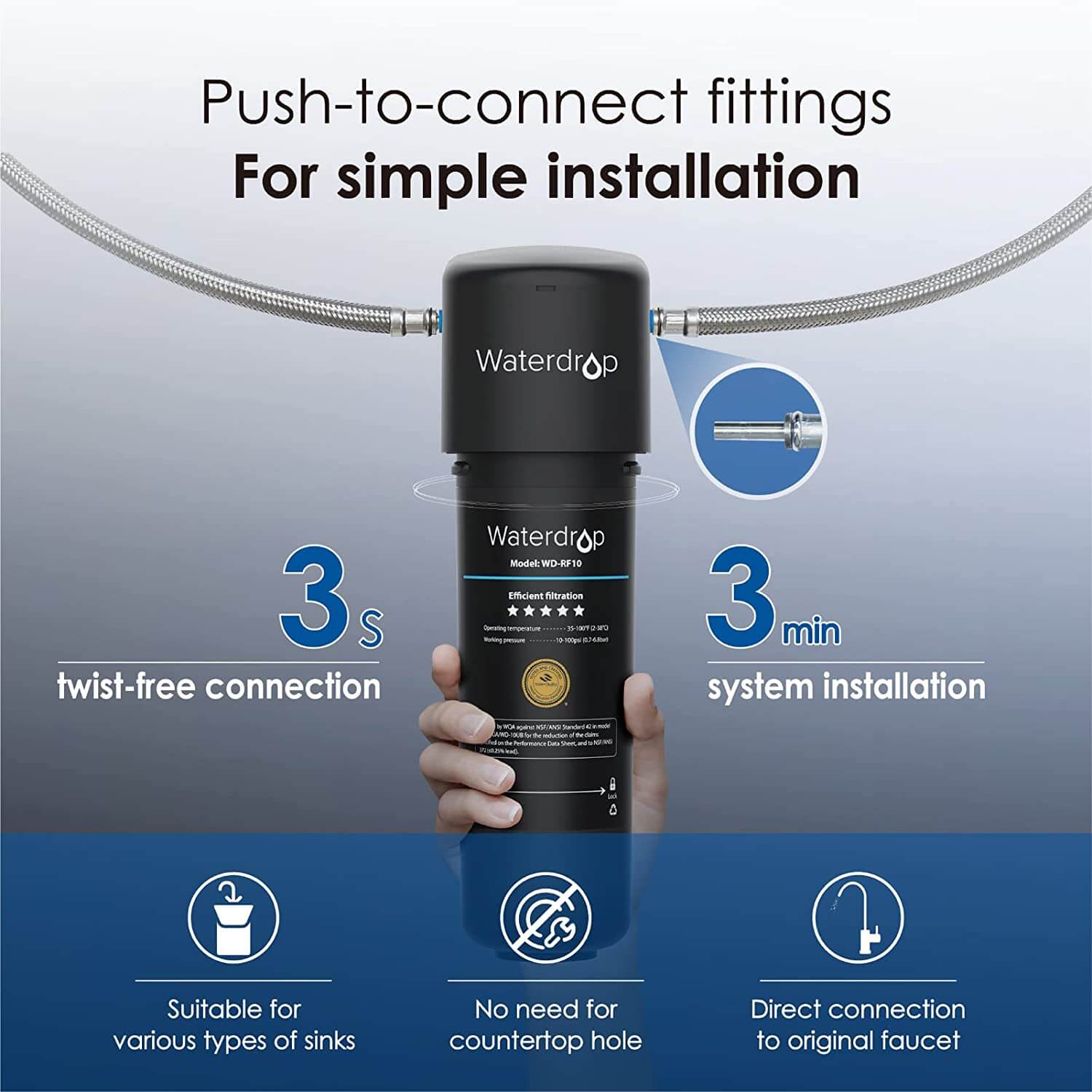
Waterdrop 10UA Under Sink Filter
£59.48
NSF 42/53 certified carbon block filter that fits under your sink. Removes chlorine, lead, VOCs, and reduces PFAS. Easy DIY installation in 30 minutes. Filter lasts 12 months or 8,000 litres.
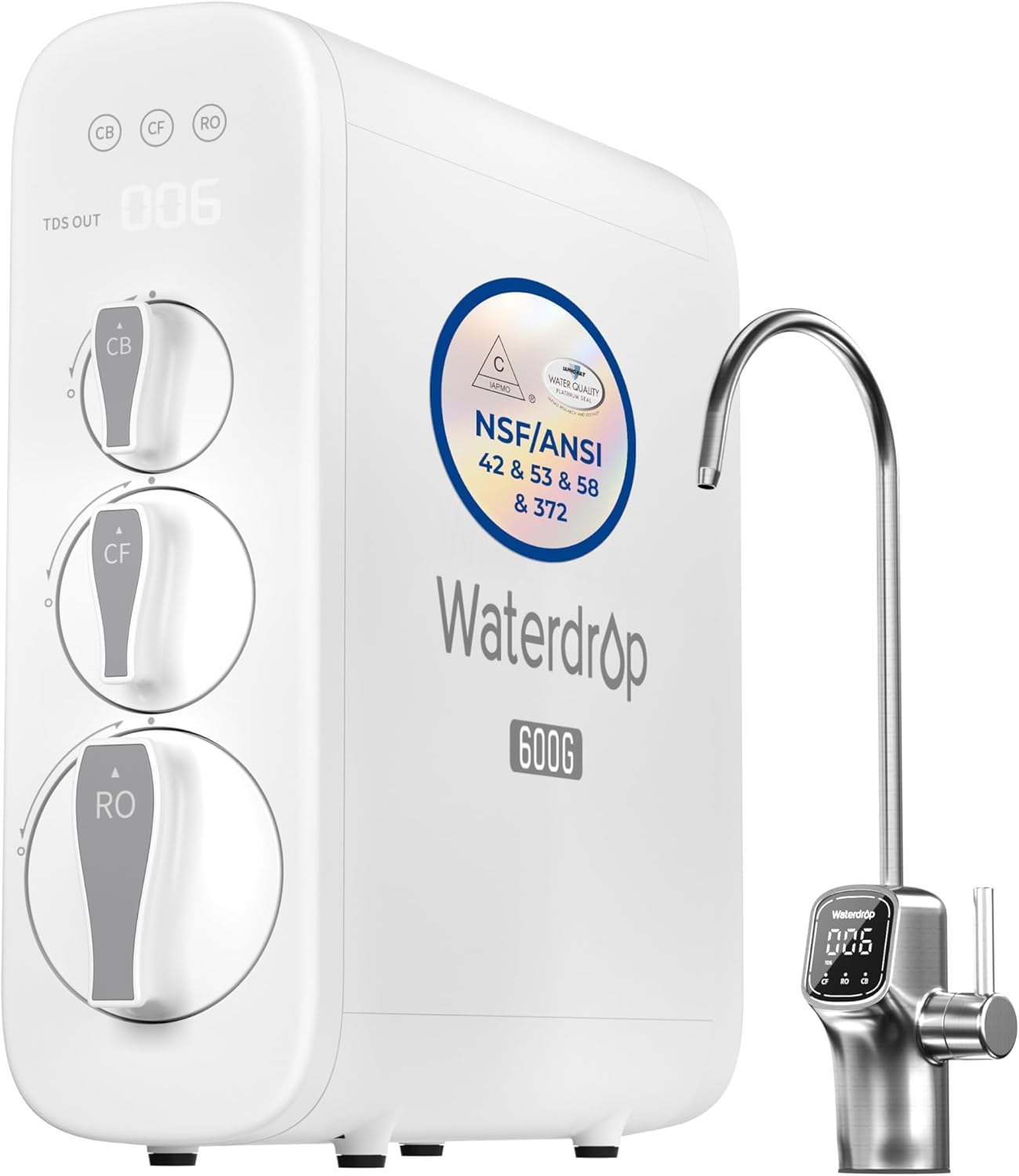
Waterdrop G3P600 Reverse Osmosis System
£399
Tankless RO system that removes 99%+ of ALL contaminants including PFAS, lead, fluoride, arsenic, microplastics, and TDS. Compact design fits under most sinks. Smart faucet shows filter life. UK customer support.
PFAS Removal: Filter Types Compared
| Filter Type | PFAS Removal | Price Range | Best For |
|---|---|---|---|
| Reverse Osmosis | 99%+ | £200-£500 | Maximum protection |
| Carbon Block (NSF P473) | 70-95% | £50-£150 | Good value protection |
| Granular Carbon | 40-70% | £30-£80 | Basic improvement |
| Standard Jug Filter | 0-20% | £20-£40 | Taste only (not PFAS) |
A Simple Guide to Which Filter Type Usually Suits Which Concern
A simple guide to which filter type usually suits which concern.
Jug Filters
Typical price: £20-40Best for improving chlorine taste and odour, with no installation needed.
Under-Sink Carbon Filters
Typical price: £80-150A good middle-ground option for better taste, odour, sediment, and some chemical reduction.
Multi-Stage Under-Sink Systems
Typical price: £150-300Designed for broader reduction, but performance varies by model and certification.
Reverse Osmosis Systems
Typical price: £200-400Best for broader contaminant reduction, including concerns about lead, PFAS, fluoride, and microplastics.
Whole-House Systems
Typical price: £500-2000+Best for protecting appliances and treating water throughout the home, rather than just at one drinking tap.
Most UK homes do well with a simple under-sink carbon filter or a reverse osmosis system, depending on the concern. If you are worried about lead pipes or broader contaminant reduction, start by comparing certified under-sink and RO options carefully.
Frequently Asked Questions
Do water filters remove PFAS?
Yes, but only certain types. Reverse osmosis (RO) systems remove 99%+ of PFAS. Activated carbon filters with NSF P473 certification remove 70-95% of PFAS. Standard jug filters like basic Brita do NOT effectively remove PFAS.
What is NSF P473 certification?
NSF P473 is the specific certification for PFAS removal. It tests filters against PFOA and PFOS - the two most common 'forever chemicals'. A filter with NSF P473 has been independently verified to reduce these contaminants by at least 70%.
Does boiling water remove PFAS?
No. PFAS are extremely heat-stable - that's why they're called 'forever chemicals'. Boiling water actually concentrates PFAS as water evaporates. The only effective removal methods are reverse osmosis, activated carbon filtration, or ion exchange systems.
Is PFAS in UK tap water?
Yes. Studies have found PFAS in UK tap water supplies, though levels vary by region. Areas near airports, military bases, and industrial sites tend to have higher levels. UK regulations are currently less strict than the EU's proposed limits.
Related Guides
Disclaimer: All information was correct at time of writing (February 2025). Product specifications and prices may change. We review this content every 3 months to ensure accuracy. This page contains affiliate links - we may earn a small commission if you purchase through our links, at no extra cost to you. This helps support our independent testing and research.
A Note on UK Water — From Keith
I want to be clear about this: UK water treatment standards are high, and the water leaving treatment works is generally safe to drink. That matters, and it is important not to lose sight of it.
At the same time, water still has to travel through local infrastructure and household plumbing before it reaches your tap. For some people, that is where practical concerns begin — whether that is taste, hard water, older pipework, or a desire to reduce certain contaminants more carefully.
That is how I think about filtration. Not as something everyone must buy, and not as a reason to panic, but as an optional extra layer of control for households that want it.
And if a filter is not in your budget, that does not mean you are unprotected. Simple habits such as using fresh cold water for drinking and cooking, flushing standing water from older pipes, and checking your local water information can still be sensible steps.